
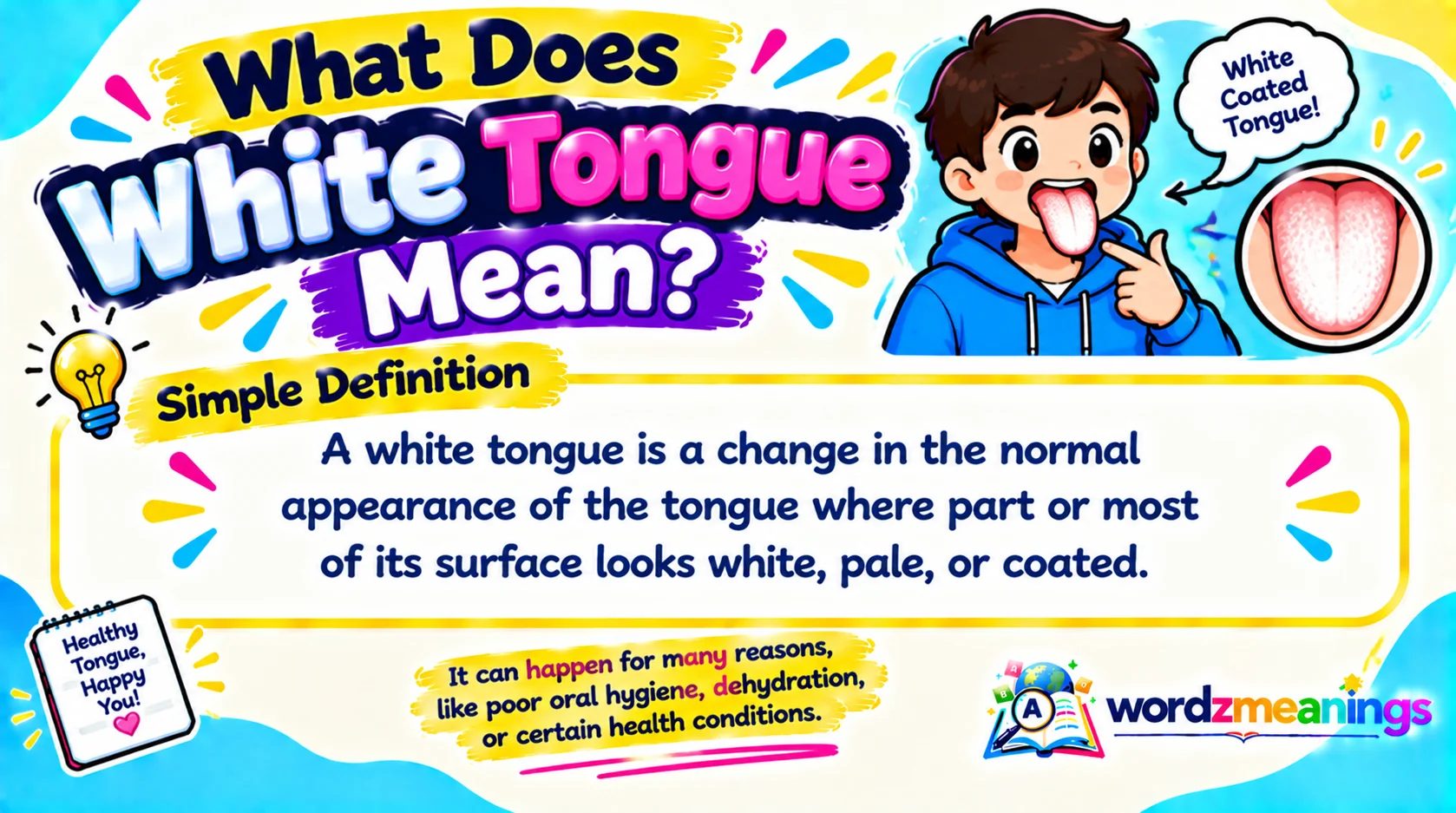
A white tongue usually means that a white coating or patches have formed on the surface of the tongue. This can happen because of trapped food, dead cells, bacteria, dry mouth, poor oral hygiene, or certain mouth conditions.
Most cases are harmless, but a white tongue that lasts, hurts, bleeds, or keeps returning may need attention.
People often search what does white tongue mean after noticing a pale or coated tongue while brushing their teeth, looking in the mirror, or taking a photo.
It can also be noticed after waking up, during an illness, or when the mouth feels unusually dry.
Understanding the possible reasons can help you decide whether simple oral care is enough or whether you should speak with a dentist or healthcare professional.
What Does White Tongue Mean?
A white tongue is a change in the normal appearance of the tongue where part or most of its surface looks white, pale, or coated.
The white appearance often comes from material collecting between the tiny bumps on the tongue. These bumps are called papillae. Food particles, bacteria, dead cells, and mucus can become trapped there.
Simple Definition of White Tongue
White tongue means the tongue has developed a white coating or white-looking areas on its surface.
It doesn’t automatically mean that something is seriously wrong.
The appearance can range from a thin white film to thicker patches that cover a large part of the tongue.
What Does White Tongue Mean in Simple Words?
In simple words, a white tongue usually means that something has caused the surface of your tongue to look coated or pale.
Common reasons include:
- Not cleaning the tongue regularly
- Dry mouth
- Dehydration
- Mouth breathing
- Food buildup
- Bacteria buildup
- Smoking or tobacco use
- Irritation
- Some medicines
- Certain oral infections
- Some medical conditions
The exact meaning depends on what the tongue looks like and whether other symptoms are present.
Quick Answer
| Question | Answer |
|---|---|
| Meaning | A white coating or white patches on the tongue |
| Full Form | Not an abbreviation |
| Pronunciation | White tongue: wyt tung |
| Category | Oral health / tongue appearance |
| Tone | Neutral medical description |
| Used On | Everyday health conversations, dental discussions, searches, and social media |
| Difficulty Level | Easy |
| One-Line Definition | A white tongue is a tongue that appears coated or has white areas on its surface. |
Why Does the Tongue Turn White?
The tongue naturally collects bacteria, food particles, and shed cells. Normally, saliva and regular eating, drinking, brushing, and tongue movement help clear much of this material.
Sometimes, however, more material collects than usual.
Buildup on the Tongue
One of the simplest reasons for a white tongue is buildup on the tongue’s surface.
The tiny papillae can become longer or more noticeable and trap:
- Food particles
- Bacteria
- Dead cells
- Mucus
What Does White Tongue Mean
Dry Mouth
A dry mouth can make a white tongue more noticeable.
Saliva helps keep the mouth clean. When there isn’t enough saliva, material can build up more easily.
Dry mouth may happen after:
- Sleeping
- Breathing through the mouth
- Not drinking enough fluids
- Certain medicines
- Stress
- Some health conditions
What Does White Tongue Mean
Poor Oral Hygiene
If the tongue isn’t cleaned as part of normal oral care, bacteria and debris can accumulate.
This doesn’t mean a person is dirty or unhealthy. Even people with good dental habits can occasionally develop a coated tongue.
However, regular brushing and gentle tongue cleaning can help reduce buildup.
What Are the Common Causes of White Tongue?
There isn’t just one answer to what does white tongue mean.
A white tongue can have several possible causes. The appearance and other symptoms can provide useful clues.
1. Normal Tongue Coating
A light white coating can be completely harmless.
The tongue may look slightly white after:
- Sleeping
- Eating certain foods
- Drinking less water
- Going several hours without cleaning the mouth
If the coating disappears with gentle cleaning and there are no other symptoms, it may simply be surface buildup.
2. Dehydration
Not getting enough fluids can reduce saliva and make the tongue look coated.
You may also notice:
- Dry lips
- Sticky saliva
- What Does White Tongue Mean
- Increased thirst
Drinking enough fluids may help when dehydration is contributing to the coating.
3. Dry Mouth
Dry mouth, also called xerostomia, can contribute to tongue coating.
Some people experience dry mouth because of medicines, mouth breathing, stress, or other causes.
A persistently dry mouth can also increase the risk of dental problems, so ongoing symptoms are worth discussing with a healthcare professional or dentist.
4. Mouth Breathing
Breathing through the mouth can dry the tongue.
What Does White Tongue Mean
- A blocked nose
- Nasal congestion
- Allergies
- A habit of sleeping with the mouth open
The tongue may look especially white or dry after waking.
5. Smoking and Tobacco
Smoking and tobacco use can affect the appearance and health of the mouth.
Tobacco can contribute to changes in the tongue’s surface and may increase the buildup of debris.
It can also contribute to other oral health problems.
6. Certain Medicines
Some medicines can cause dry mouth or otherwise change the balance of the mouth.
If a white tongue appeared after starting a new medicine, don’t stop the medicine on your own.
Instead, ask a healthcare professional whether the medicine could be contributing to the change.
7. Oral Thrush
A white tongue can sometimes be related to oral thrush, a fungal infection caused by an overgrowth of Candida.
Thrush can produce creamy or white patches in the mouth.
Other symptoms may include:
- Soreness
- Burning
- Redness
- An unpleasant taste
- What Does White Tongue Mean
White patches that don’t behave like ordinary tongue coating may need professional evaluation.
8. Irritation
The tongue can become irritated by things such as:
- Very hot foods or drinks
- Sharp foods
- Certain oral products
- Biting the tongue
- Excessive rubbing or scraping
Irritation may cause temporary changes in the tongue’s appearance.
9. Other Oral Conditions
What Does White Tongue Mean
These can look different from an ordinary coating.
That’s why the question what does white tongue mean can’t always be answered from color alone.
The location, texture, duration, and other symptoms matter too.
What Does a White Tongue Look Like?
A white tongue doesn’t look exactly the same in everyone.
The coating may be:
- Thin
- Thick
- Patchy
- Evenly spread
- Cream-colored
- Bright white
- Grayish-white
Thin White Coating
A thin coating across much of the tongue is often associated with ordinary surface buildup.
It may become less noticeable after:
- Drinking water
- What Does White Tongue Mean
- Brushing
- Gently cleaning the tongue
Thick White Coating
A thicker coating may have several possible causes.
It can occur with significant dryness, buildup, irritation, or some oral conditions.
Thickness alone doesn’t identify the cause.
White Patches
White patches that appear in specific areas may be different from a general coating.
Pay attention if patches:
- Stay in the same place
- Don’t come off with gentle cleaning
- Hurt
- What Does White Tongue Mean
- Become larger
- Keep returning
Persistent patches should be checked by a dentist or healthcare professional.
Is White Tongue Normal?
Sometimes, yes.
A mild white coating can be a normal temporary change, especially when it occurs without pain or other symptoms.
When a White Coating May Be Harmless
A white tongue is more likely to be simple surface coating when:
- It is mild
- It appeared recently
- There is no significant pain
- There are no unusual sores
- What Does White Tongue Mean
- It changes throughout the day
- You otherwise feel well
This doesn’t prove that the cause is harmless, but these features can be reassuring.
When It May Need More Attention
A white tongue deserves more attention when it:
- Lasts for a long time
- Keeps coming back
- Causes pain
- Burns or feels sore
- Bleeds
- Produces persistent mouth discomfort
- Makes eating difficult
- What Does White Tongue Mean
A dentist can examine the tongue and mouth and determine whether further evaluation is needed.
Does White Tongue Mean You Are Sick?
Not necessarily.
A white tongue by itself does not prove that someone is sick.
It can occur from simple things such as dry mouth or normal buildup.
White Tongue During an Illness
People may notice changes in their tongue when they are unwell.
For example, reduced food intake, dehydration, fever, mouth breathing, or changes in oral care can make the tongue appear more coated.
So, if someone asks what does white tongue mean when sick, the answer depends on the illness and the other symptoms.
The tongue’s appearance alone usually isn’t enough to identify the underlying problem.
Does White Tongue Mean Dehydration?
It can.
Dehydration can reduce saliva and make the tongue look dry or coated.
Signs That May Occur With Dehydration
A person may also notice:
- Thirst
- Dry mouth
- Dry lips
- Darker urine
- Feeling tired
- Sticky saliva
What Does White Tongue Mean
If dehydration is suspected, consider the overall symptoms and fluid intake rather than using tongue color as the only clue.
Does White Tongue Mean Poor Hygiene?
Not always.
Poor oral hygiene can contribute to tongue coating, but a white tongue doesn’t automatically mean someone doesn’t brush properly.
Why Clean Mouths Can Still Have a White Tongue
Even with regular brushing, the tongue naturally collects:
- Bacteria
- Dead cells
- Food particles
- Mucus
What Does White Tongue Mean
So it’s better to view a white tongue as a symptom or appearance change, not as proof of poor hygiene.
How to Clean a White Tongue
Gentle oral care can help when the white coating is caused by ordinary buildup.
Brush Your Tongue Gently
Use a soft toothbrush and gently brush the tongue.
You don’t need to scrub hard.
Aggressive brushing can irritate the tongue and make the problem worse.
Use a Tongue Cleaner
A tongue scraper or tongue cleaner can remove surface debris.
What Does White Tongue Mean
There is no need to scrape until the tongue looks perfectly pink.
Drink Enough Water
Keeping the mouth hydrated can help reduce dryness and surface buildup.
Sip water regularly, especially if your mouth often feels dry.
Keep Up With Dental Care
Continue basic oral care, including:
- Brushing teeth twice a day
- Cleaning between teeth
- Cleaning the tongue gently
- What Does White Tongue Mean
Good oral care supports overall mouth health.
What Not to Do to a White Tongue
Trying to remove a coating too aggressively can irritate the tongue.
Don’t Scrape Hard
What Does White Tongue Mean
A tongue scraper should remove surface debris gently, not damage the tissue.
Don’t Use Harsh Chemicals
Avoid putting strong household substances or unapproved chemicals on your tongue.
The mouth contains sensitive tissue that can be easily irritated.
Don’t Assume the Cause
What Does White Tongue Mean
If it doesn’t improve or comes with unusual symptoms, professional evaluation is more useful than repeatedly trying home treatments.
Common Mistakes About White Tongue
Assuming a White Tongue Always Means Poor Hygiene
A common mistake is assuming that a white tongue automatically means someone doesn’t brush or clean their mouth properly. A white coating can happen for several reasons, so it isn’t fair or accurate to blame poor hygiene right away.
Thinking a White Tongue Always Means an Infection
Not every white tongue is caused by an infection. A temporary coating can sometimes be related to things such as dry mouth, food particles, dehydration, or normal buildup on the tongue.
Assuming Every White Tongue Is Thrush
Oral thrush can cause white patches in the mouth, but not every white coating on the tongue is thrush. Other causes can look similar, so the appearance alone doesn’t always identify the cause.
Trying to Scrape It Away Aggressively
Another mistake is scraping the tongue too hard in an attempt to remove the white coating. Excessive scraping can irritate the tongue and make the area sore. Gentle tongue cleaning is generally preferable.
Ignoring Dry Mouth
People sometimes focus only on the white coating and forget about dry mouth. Reduced saliva can allow more debris and bacteria to build up on the tongue, making it appear white.
Assuming It Will Always Go Away on Its Own
A temporary white coating may clear up with normal oral care, but a coating that persists, keeps returning, or comes with other symptoms deserves attention rather than being ignored.
Diagnosing the Cause From Color Alone
The color of the tongue isn’t enough to determine exactly what’s happening. Other details, such as how long it has been present, whether it can be removed, and whether there is pain or irritation, can matter.
Confusing a White Tongue With White Patches Elsewhere in the Mouth
A coated tongue isn’t necessarily the same as white patches on the cheeks, gums, palate, or other parts of the mouth. Different conditions can affect different areas.
Using Random Home Remedies Without Knowing the Cause
Another mistake is trying strong or irritating substances simply because someone online recommends them. A remedy that doesn’t match the underlying cause may irritate the mouth instead of helping.
Assuming a White Tongue Is Always Serious
A white tongue can have many simple explanations, and its presence alone doesn’t automatically mean something serious is wrong. At the same time, persistent or unusual changes shouldn’t be dismissed.
Waiting Too Long When Other Symptoms Appear
If a white tongue continues or appears along with pain, bleeding, sores, difficulty swallowing, fever, or other concerning symptoms, it’s better to seek advice from a dentist or healthcare professional rather than relying on internet explanations.
Assuming Everyone With a White Tongue Has the Same Cause
Two people can have a similar-looking white tongue for completely different reasons. The cause depends on the person’s symptoms, oral health, medications, habits, and other factors.
Confusing a White Coating With the Natural Appearance of the Tongue
The tongue naturally has tiny structures called papillae. These can collect debris and create a temporary coating that makes the tongue look whiter than usual.
Overlooking Changes in Oral Care
Skipping regular brushing, not cleaning the tongue, or having changes in daily oral care can affect the appearance of the tongue. However, oral hygiene is only one possible factor.
Assuming Internet Search Results Can Replace a Diagnosis
Search results can help explain what a white tongue might mean, but they cannot confirm the cause in a particular person. If the change is persistent or concerning, professional evaluation is more appropriate.
White Tongue vs. Oral Thrush
What Does White Tongue Mean
| Feature | Ordinary Tongue Coating | Oral Thrush |
|---|---|---|
| Appearance | Often a thin or moderate coating | Can produce creamy or white patches |
| Cause | Often buildup, dryness, or mouth conditions | Overgrowth of Candida |
| Pain | Usually absent | Soreness or burning may occur |
| Cleaning | May improve with gentle cleaning | Patches may not behave like ordinary coating |
| Other symptoms | Often none | May include redness, discomfort, or altered taste |
| Evaluation | May not need treatment | May require professional diagnosis and treatment |
Why the Difference Matters
A person shouldn’t assume that every white tongue is thrush.
What Does White Tongue Mean
The safest approach is to consider the complete picture.
Can You Get a White Tongue From Not Drinking Enough Water?
Yes, dehydration can contribute to a coated-looking tongue.
When the mouth becomes dry, the normal cleaning effect of saliva is reduced.
White Tongue After Sleeping
It’s common for the tongue to look different immediately after waking.
During sleep:
- You aren’t drinking water
- Saliva flow changes
- Mouth breathing may occur
- What Does White Tongue Mean
A morning coating that becomes less noticeable after drinking, eating, brushing, or cleaning the tongue may simply be temporary buildup.
Can Food Cause a White Tongue?
Food itself isn’t always the direct cause, but food particles can contribute to a coated tongue.
Soft or sticky foods may leave material behind, especially when tongue cleaning is limited.
Foods and Drinks Can Also Change Tongue Appearance
Some foods can temporarily alter the color or coating of the tongue.
This doesn’t necessarily indicate a health problem.
If the change disappears after normal eating, drinking, and oral cleaning, it may simply be temporary.
Does White Tongue Cause Bad Breath?
What Does White Tongue Mean
The tongue can collect bacteria and food particles, and some bacteria produce compounds associated with unpleasant breath.
Why the Tongue Matters for Breath
Cleaning the tongue can reduce some of the material that bacteria use.
However, bad breath can also come from:
- Teeth
- Gums
- Dry mouth
- Certain foods
- Smoking
- Mouth infections
- What Does White Tongue Mean
So a white tongue isn’t the only possible reason for bad breath.
Is White Tongue Contagious?
A white tongue itself is not a disease and isn’t automatically contagious.
Whether something is contagious depends on the underlying cause.
Why the Cause Matters
If the white appearance is simply caused by surface buildup or dryness, it isn’t something you “catch” from another person.
If it is connected to an infection, however, the underlying condition may have different considerations.
What Does White Tongue Mean
Can Stress Cause a White Tongue?
Stress can sometimes affect habits and body functions that influence the mouth.
For example, stress may be associated with:
- Dry mouth
- Changes in eating habits
- Reduced attention to oral care
- Mouth breathing
- What Does White Tongue Mean
However, a white tongue shouldn’t automatically be blamed on stress.
If the change is persistent, another cause may need to be considered.
Can a White Tongue Be a Sign of an Infection?
Sometimes.
What Does White Tongue Mean
Oral thrush is one example.
Signs That Make Infection More Concerning
Consider getting professional advice if the white areas are accompanied by:
- Significant soreness
- Burning
- Redness
- Difficulty eating
- Difficulty swallowing
- Persistent mouth changes
- Fever or other signs of illness
These symptoms don’t identify one specific infection, but they make professional evaluation more useful.
When Should You See a Dentist or Doctor?
What Does White Tongue Mean
However, persistent or unusual changes should not be ignored.
Make an Appointment If
Consider speaking with a dentist or healthcare professional if:
- The white area doesn’t go away
- It repeatedly returns
- It becomes painful
- It bleeds
- It grows or changes
- You have persistent mouth sores
- You have trouble eating or swallowing
- You notice another unusual change in your mouth
A professional can examine the tongue directly rather than trying to identify the cause from color alone.
Seek Prompt Medical Attention for Serious Symptoms
If tongue or mouth changes occur with significant difficulty breathing, severe swelling, or an inability to swallow, seek urgent medical care.
These symptoms can have causes that need prompt attention.
Does a White Tongue Mean Cancer?
A white tongue does not automatically mean cancer.
Most white tongue cases are related to much more common causes such as coating, dryness, irritation, or oral conditions.
However, a persistent white patch that doesn’t go away should be evaluated rather than diagnosed at home.
Why Persistent Changes Matter
The important point isn’t simply that something is white.
A healthcare professional may consider:
- How long it has been present
- Whether it can be removed
- Whether it hurts
- Whether it changes
- Where it is located
- Whether there are other mouth changes
This is why persistent unexplained patches deserve a proper examination.
White Tongue in Children
Parents may notice a white tongue in babies or children and wonder what it means.
The cause can vary depending on the child’s age and symptoms.
White Tongue in Babies
In babies, milk residue can sometimes make the tongue look white after feeding.
A coating that doesn’t easily clear, especially when accompanied by mouth discomfort or feeding problems, may have another cause.
Parents shouldn’t try aggressive scraping.
White Tongue in Older Children
Older children can also develop tongue coating from:
- Dry mouth
- Dehydration
- Poor tongue cleaning
- Illness
- Mouth breathing
- Certain oral conditions
If a child’s white tongue persists or causes pain, a pediatrician or dentist can help determine the cause.
White Tongue in the Morning
A white tongue is often more noticeable in the morning.
This can happen because the mouth is naturally less active while you’re sleeping.
Why It Looks Whiter After Sleep
During the night:
- You aren’t eating or drinking.
- Saliva patterns change.
- Bacteria and debris can collect.
- Mouth breathing may dry the tongue.
- The coating can become easier to see.
If the coating improves after normal oral care, it may simply be temporary buildup.
What Does White Tongue Mean After Waking Up?
If your tongue looks white immediately after waking, it may simply reflect overnight buildup or dryness.
Try normal oral care and hydration.
If the tongue remains unusually white throughout the day or the change continues for many days, consider discussing it with a dentist or healthcare professional.
What Does White Tongue Mean With Bad Breath?
A white-coated tongue and bad breath can occur together because bacteria and debris may collect on the tongue.
However, bad breath has many possible causes.
When Both Symptoms Continue
If tongue coating and bad breath continue despite good oral care, look beyond the tongue alone.
A dentist can check for common oral causes such as gum problems, tooth problems, or other mouth conditions.
What Does White Tongue Mean With a Sore Throat?
A white tongue with a sore throat can happen for several reasons.
The tongue appearance alone doesn’t identify the cause.
Look at the Whole Set of Symptoms
Pay attention to:
- Fever
- Cough
- Congestion
- Swollen glands
- Difficulty swallowing
- Mouth soreness
- How long the symptoms have lasted
If symptoms are severe, persistent, or getting worse, professional medical advice may be appropriate.
What Does White Tongue Mean With a Bad Taste?
A coated tongue can sometimes be associated with an unpleasant or unusual taste.
This may happen when bacteria, food debris, dry mouth, or another mouth condition affects the oral environment.
A persistent bad taste should be evaluated, especially if it occurs with pain, sores, swelling, or other unusual symptoms.
Common Myths About White Tongue
Myth: Every White Tongue Means Thrush
False.
Thrush is one possible cause, but ordinary coating and dryness are also common possibilities.
Myth: White Tongue Always Means Poor Hygiene
False.
Even people with good oral hygiene can develop a coated tongue.
Myth: Scraping Harder Will Make It Go Away
False.
Aggressive scraping can irritate the tongue.
Gentle cleaning is enough for ordinary surface buildup.
Myth: A White Tongue Always Means Something Serious
False.
A white tongue can be temporary and harmless.
The duration, appearance, and accompanying symptoms matter.
Myth: Tongue Color Can Diagnose a Disease
False.
Tongue appearance can provide clues, but color alone cannot reliably diagnose an underlying medical condition.
FAQs
What does white tongue mean?
A white tongue means that the tongue has developed a white coating or white-looking areas. Common causes include surface buildup, dry mouth, dehydration, mouth breathing, irritation, certain medicines, and some oral conditions.
Is a white tongue serious?
Usually, a mild temporary coating isn’t necessarily serious. Persistent, painful, bleeding, or unusual white patches should be checked by a dentist or healthcare professional.
How do I get rid of a white tongue?
Gentle tongue brushing or tongue cleaning, good dental hygiene, and adequate hydration may help when ordinary buildup or dryness is responsible.
Should I scrape my white tongue?
You can gently clean the tongue with a soft toothbrush or tongue cleaner. Avoid forceful scraping because it can irritate the tissue.
Can dehydration cause a white tongue?
Yes. Dehydration can reduce saliva and contribute to a dry, coated-looking tongue.
Can dry mouth cause white tongue?
Yes. Reduced saliva can allow bacteria, food particles, and dead cells to build up more easily on the tongue.
Is white tongue contagious?
A white coating itself isn’t contagious. Whether an underlying cause can spread depends on what is causing the tongue change.
Does white tongue mean bad breath?
It can contribute to bad breath because bacteria and debris can collect on the tongue. But bad breath has many other possible causes too.
How long does a white tongue last?
The duration depends on the cause. A temporary coating may improve after hydration and oral cleaning, while a persistent white patch may need professional evaluation.
Can children have a white tongue?
Yes. Children can develop a coated tongue for several reasons, including food or milk residue, dry mouth, illness, mouth breathing, and oral conditions.
Can babies have a white tongue?
Yes. Milk residue can make a baby’s tongue look white. Persistent white patches or feeding discomfort should be discussed with a pediatrician or other healthcare professional.
Does white tongue mean I am dehydrated?
It can be a sign that the mouth is dry, but tongue color alone cannot confirm dehydration.
When should I worry about a white tongue?
Pay more attention when the change is persistent, painful, bleeding, spreading, repeatedly returning, or associated with difficulty eating or swallowing.
Conclusion
So, what does white tongue mean? Most often, it means that the surface of the tongue has developed a white coating or white-looking areas.
This can happen because of normal buildup, dry mouth, dehydration, mouth breathing, irritation, tobacco use, medicines, or certain oral conditions.
A temporary coating that improves with gentle cleaning and hydration may not be a reason for concern. But a white area that persists, changes, hurts, bleeds, or comes with other unusual symptoms should be examined by a dentist or healthcare professional.
The key is not to judge the cause from tongue color alone. Look at the appearance, duration, symptoms, and changes over time.

I am Brandon Ellis, a language enthusiast and content writer at WordzMeanings. I create clear, accurate, and easy-to-understand explanations of words, phrases, and expressions to help readers improve their English every day.



