
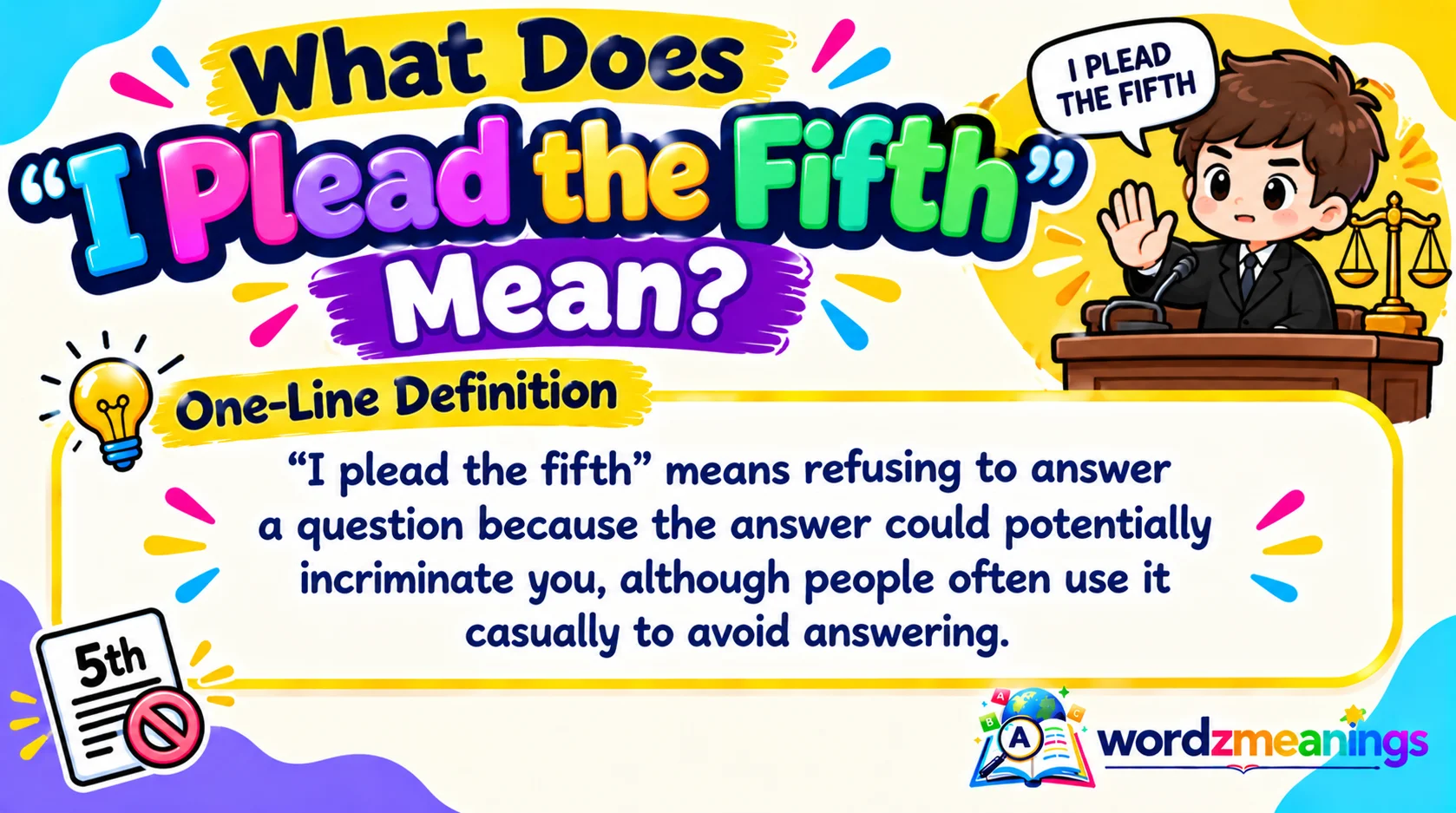
“I plead the fifth” means a person is choosing not to answer a question because their answer could potentially expose them to criminal prosecution.
The phrase comes from the Fifth Amendment to the U.S. Constitution, which protects a person from being compelled to testify against themselves in a criminal case.
People also use the expression casually when they don’t want to answer an embarrassing, awkward, or personal question.
━━━━━━━━━━━━━━━━━━━━━━
Quick Answer
Meaning
“I plead the fifth” means “I refuse to answer this question because my answer could incriminate me.”
In everyday conversation, however, people often use it more loosely to mean:
“I don’t want to answer that.”
The serious legal meaning and the casual meaning are not exactly the same.
Full Form
“I plead the fifth” does not have a traditional full form like a texting abbreviation.
It refers to the Fifth Amendment of the U.S. Constitution.
Pronunciation
I plead the fifth:
eye pleed thuh fifth
Category
Legal expression / American English idiom / slang-like casual expression
Tone
The tone depends on the situation. It can sound:
- Serious
- Legal
- Defensive
- Humorous
- Playful
- Secretive
Used On
You may see or hear it in:
- Everyday conversations
- Movies and TV shows
- Courtroom discussions
- Interviews
- Social media
- Memes
- Podcasts
- Group chats
- Arguments
- Jokes
Difficulty Level
Easy
One-Line Definition
“I plead the fifth” means refusing to answer a question because the answer could potentially incriminate you, although people often use it casually to avoid answering.
━━━━━━━━━━━━━━━━━━━━━━
What Does “I Plead the Fifth” Mean?
The Simple Meaning
The easiest way to understand “I plead the fifth” is:
“I’m choosing not to answer because my answer might get me into legal trouble.”
The phrase comes from the Fifth Amendment, which includes protection against being compelled to be a witness against yourself.
For example, imagine someone is asked:
“Did you take the money?”
If answering “yes” could expose that person to criminal charges, they may invoke their Fifth Amendment right instead of answering.
What Does I Plead the Fifth Mean
“Who ate the last piece of cake?”
A person might laugh and say:
“I plead the fifth.”
Here, they aren’t actually using a constitutional right. They’re jokingly saying:
“I’m not telling you.”
Why Is It Called “the Fifth”?
The word “fifth” refers to the Fifth Amendment of the U.S. Constitution.
The Fifth Amendment contains several protections. One of them protects people from being compelled to incriminate themselves.
What Does I Plead the Fifth Mean
“I plead the Fifth.”
It is short for the idea of invoking the Fifth Amendment right against self-incrimination.
━━━━━━━━━━━━━━━━━━━━━━
What Is the Fifth Amendment?
The Fifth Amendment in Simple Words
The Fifth Amendment is part of the Bill of Rights in the U.S. Constitution.
It provides several important legal protections.
One of its protections is commonly described as the right against self-incrimination.
In simple terms, this means the government generally cannot force a person to provide testimonial evidence that would incriminate that person in a criminal matter.
What Does I Plead the Fifth Mean
“I plead the fifth.”
What Does Self-Incrimination Mean?
Self-incrimination means providing information or testimony that could help establish that you committed a crime.
For example, suppose a person is suspected of a crime and is asked a question that could produce an incriminating answer.
Instead of answering, the person may invoke the applicable Fifth Amendment protection.
The important point is that this protection is about legal self-incrimination, not simply refusing every question a person dislikes.
━━━━━━━━━━━━━━━━━━━━━━
Is “I Plead the Fifth” a Legal Phrase?
Yes, But the Everyday Version Is Different
“I plead the fifth” has a real legal connection, but people frequently use it as a joke.
In a legal setting, invoking the Fifth Amendment can have specific rules and consequences. A person’s ability to invoke the privilege depends on the circumstances.
What Does I Plead the Fifth Mean
Legal Example
Lawyer: “Did you knowingly take the property?”
Person: “I plead the Fifth.”
The person is invoking a constitutional protection against compelled self-incrimination.
Casual Example
Friend: “Did you eat all the cookies?”
You: “I plead the fifth.”
In this situation, you’re probably joking.
You’re not making a formal legal claim. You’re simply avoiding the question.
━━━━━━━━━━━━━━━━━━━━━━
What Does “I Plead the Fifth” Mean in a Conversation?
When Someone Doesn’t Want to Answer
A person may say “I plead the fifth” when they don’t want to reveal something.
For example:
A: “Who told you about my surprise party?”
B: “I plead the fifth.”
This usually means:
“I’m not telling you.”
When the Question Is Embarrassing
People also use the expression when a question is uncomfortable.
A: “How much money did you spend on that?”
B: “I plead the fifth.”
The speaker may simply want to avoid discussing the amount.
When the Answer Could Cause Trouble
What Does I Plead the Fifth Mean
A: “Were you the one who broke the remote?”
B: “I plead the fifth.”
The person is avoiding a direct answer.
━━━━━━━━━━━━━━━━━━━━━━
Why Do People Say “I Plead the Fifth”?
To Avoid Giving an Answer
The most common reason is simple:
They don’t want to answer.
The phrase gives them a short and recognizable way to avoid the question.
To Be Funny
The expression is also popular because it sounds dramatic.
Someone can turn an ordinary question into a pretend courtroom moment.
Mom: “Who left the refrigerator open?”
Son: “I plead the fifth.”
What Does I Plead the Fifth Mean
To Keep a Secret
A person may also use it when they don’t want to reveal information.
“Did Sarah tell you what happened?”
“I plead the fifth.”
This can suggest:
“I know something, but I’m not going to tell you.”
To Avoid Embarrassment
The phrase can also help someone escape an awkward question without directly saying why.
━━━━━━━━━━━━━━━━━━━━━━
Is “I Plead the Fifth” Slang?
It Can Be Used Like Slang
What Does I Plead the Fifth Mean
However, its casual use has become common enough that it can function like an informal expression.
When friends use it, they usually aren’t talking about constitutional law.
They are simply saying:
“I’m not answering that.”
Legal Expression vs Casual Expression
| Situation | Meaning |
|---|---|
| Court or legal proceeding | Invoking a constitutional protection |
| Conversation with friends | “I’m not telling you” |
| Joke | “I refuse to answer!” |
| Embarrassing question | “I’d rather not say” |
| Social media | Often used humorously |
| Meme | Usually means avoiding a confession |
━━━━━━━━━━━━━━━━━━━━━━
What Does “Plead” Mean in “I Plead the Fifth”?
Meaning of “Plead”
What Does I Plead the Fifth Mean
In legal language, it can relate to making a formal statement or asserting a legal position.
In the phrase “I plead the fifth,” the speaker is referring to the Fifth Amendment protection.
The phrase is commonly understood even when used outside a courtroom.
Why Not Say “I Refuse”?
Someone could simply say:
“I refuse to answer.”
But “I plead the fifth” has a more recognizable and often humorous tone.
It also tells listeners that the person is intentionally avoiding the question rather than accidentally ignoring it.
━━━━━━━━━━━━━━━━━━━━━━
Real-Life Examples of “I Plead the Fifth”
Example 1: A Funny Question
Friend 1: “Did you really eat the whole pizza?”
Friend 2: “I plead the fifth.”
What Does I Plead the Fifth Mean: Friend 2 doesn’t want to admit whether they ate it.
Example 2: A Personal Question
Friend 1: “How much did you pay for those shoes?”
Friend 2: “I plead the fifth.”
What Does I Plead the Fifth Mean: The person doesn’t want to reveal the price.
Example 3: A Secret
Friend 1: “Do you know where my birthday gift is?”
Friend 2: “I plead the fifth.”
What Does I Plead the Fifth Mean: The person probably knows something but doesn’t want to reveal it.
Example 4: Getting Into Trouble
Parent: “Who broke the lamp?”
Child: “I plead the fifth.”
What Does I Plead the Fifth Mean: The child is jokingly refusing to say who broke it.
Example 5: Dating
Person 1: “Do you still have feelings for your ex?”
Person 2: “I plead the fifth.”
What Does I Plead the Fifth Mean: The person doesn’t want to answer the question.
━━━━━━━━━━━━━━━━━━━━━━
“I Plead the Fifth” in Texting
What Does It Mean in a Text?
When someone sends “I plead the fifth” in a text, it usually means:
“I’m not answering that.”
The exact meaning depends on the conversation.
For example:
You: “Did you tell him what I said?”
Friend: “I plead the fifth 😂”
The laughing emoji makes it clear that the person may be joking.
Common Texting Situations
People may use it when:
- They don’t want to admit something.
- They are hiding a surprise.
- A question is embarrassing.
- They want to tease someone.
- They don’t want to share private information.
- They are joking about being guilty.
━━━━━━━━━━━━━━━━━━━━━━
“I Plead the Fifth” on Social Media
On Instagram, someone may use “I plead the fifth” in comments, captions, or direct messages.
For example:
“Did you really go back to your ex? 👀”
“I plead the fifth.”
The meaning is usually:
“I’m not answering that.”
TikTok
On TikTok, the phrase can appear in videos, comments, captions, and jokes.
A creator might be asked an embarrassing question and respond:
“I plead the fifth.”
It often creates a humorous or dramatic effect.
Snapchat
On Snapchat, it may be used in conversations between friends when someone asks a question they don’t want to answer.
On Facebook, people may use the phrase in comments or posts, especially when discussing something embarrassing or funny.
On WhatsApp, “I plead the fifth” can be a playful way to avoid answering a friend’s question.
Discord
What Does I Plead the Fifth Mean
“Who did that?”
The response:
“I plead the fifth.”
means:
“I’m not saying.”
━━━━━━━━━━━━━━━━━━━━━━
“I Plead the Fifth” in Gaming
How Gamers Use It
What Does I Plead the Fifth Mean
For example:
Player 1: “Who accidentally killed our teammate?”
Player 2: “I plead the fifth.”
This usually means:
“I’m not admitting it.”
It’s generally playful rather than a serious legal statement.
Gaming Example
Player 1: “Who changed the settings?”
Player 2: “I plead the fifth 😂”
Here, the speaker is jokingly refusing to confess.
━━━━━━━━━━━━━━━━━━━━━━
Is “I Plead the Fifth” Rude?
Usually, No
The phrase is not normally rude.
Its tone depends on how it is said.
With friends, it can sound funny and playful.
But if someone asks a serious personal question and you respond with “I plead the fifth,” they might feel that you’re avoiding them.
When It Can Sound Annoying
If someone repeatedly refuses reasonable questions by saying “I plead the fifth,” it may sound evasive.
For example:
“Where were you?”
“I plead the fifth.”
“Who were you with?”
“I plead the fifth.”
“What happened?”
“I plead the fifth.”
What Does I Plead the Fifth Mean
━━━━━━━━━━━━━━━━━━━━━━
Is “I Plead the Fifth” Flirty?
It Is Not Naturally Flirty
“I plead the fifth” is not a flirty expression by itself.
However, someone can use it in a playful or teasing romantic conversation.
For example:
“Were you checking out my profile?”
“I plead the fifth 😏”
Here, the phrase can create a teasing or slightly flirtatious mood.
What Does I Plead the Fifth Mean
━━━━━━━━━━━━━━━━━━━━━━
Is “I Plead the Fifth” Offensive?
Usually, No
The phrase itself is generally not offensive.
It is a common expression based on U.S. constitutional law.
However, context matters.
Using it to mock a serious legal situation or someone’s real criminal case could be considered insensitive.
In ordinary conversations, though, it is usually harmless.
━━━━━━━━━━━━━━━━━━━━━━
When Should You Use “I Plead the Fifth”?
Use It With Friends
It’s a natural choice when joking with people who understand your humor.
“Did you eat my fries?”
“I plead the fifth.”
Use It for an Awkward Question
What Does I Plead the Fifth Mean
“How many hours were you on your phone yesterday?”
“I plead the fifth.”
Use It When Keeping a Secret
It can also be useful when you don’t want to reveal information.
“Do you know what we’re getting Mom for her birthday?”
“I plead the fifth.”
━━━━━━━━━━━━━━━━━━━━━━
When Should You Not Use “I Plead the Fifth”?
Don’t Treat It as a Universal Right to Ignore Questions
The casual expression doesn’t mean that you legally have the right to refuse every question.
The Fifth Amendment has a specific legal purpose and applies in particular circumstances.
Don’t Use It as Legal Advice
If you’re dealing with an actual police investigation, court proceeding, deposition, subpoena, or other legal matter, don’t rely on the casual meaning of this phrase.
Legal rights can depend heavily on the facts and circumstances.
For a real legal situation, qualified legal advice is more appropriate than relying on an internet explanation of an idiom.
Avoid It in Serious Professional Situations
If your manager asks:
“Did you complete the report?”
saying:
“I plead the fifth.”
may sound like you’re joking about your responsibility.
A direct and professional answer is usually better.
━━━━━━━━━━━━━━━━━━━━━━
What Does “I Plead the Fifth” Mean in Court?
The Legal Context
In a legal setting, the phrase refers to the constitutional privilege against compelled self-incrimination.
A person may invoke the Fifth Amendment when answering a particular question could be incriminating.
This is more precise than simply saying:
“I don’t want to answer.”
It Does Not Automatically Mean “I’m Guilty”
One of the most important points to understand is that invoking the Fifth Amendment does not automatically mean a person committed a crime.
A person may invoke the privilege because answering could expose them to criminal liability.
The decision not to answer should not automatically be treated as a confession.
It Does Not Mean Every Question Can Be Refused
The legal privilege is not a general permission to refuse any question for any reason.
Whether it applies can depend on the legal setting and the nature of the question.
That is why the casual phrase and the actual legal right should not be treated as identical.
━━━━━━━━━━━━━━━━━━━━━━
Common Mistakes About “I Plead the Fifth”
Mistake 1: Thinking It Always Means “I’m Guilty”
This is one of the biggest misunderstandings.
“I plead the fifth” does not literally mean “I’m guilty.”
In casual speech, people sometimes use it as if they’re jokingly admitting guilt, but the legal concept is different.
Mistake 2: Thinking It Means “I Know Nothing”
It usually means the opposite.
The speaker is refusing to answer.
They may know the answer, but they don’t want to provide it.
Mistake 3: Thinking It Is an Abbreviation
“I plead the fifth” isn’t an abbreviation like LOL, BRB, or IDK.
It is a phrase connected to the Fifth Amendment.
Mistake 4: Thinking It Only Means Something in Court
The original meaning is legal, but modern speakers often use it casually.
That’s why you may see it in jokes, texts, memes, and social media comments.
Mistake 5: Assuming It Works the Same Everywhere
The expression comes from the U.S. legal system.
Other countries have different constitutional and legal rules about self-incrimination.
━━━━━━━━━━━━━━━━━━━━━━
“I Plead the Fifth” vs “I Don’t Know”
| Expression | Meaning |
|---|---|
| I plead the fifth | I am intentionally not answering |
| I don’t know | I genuinely don’t know |
| I don’t want to say | I know or may know, but don’t want to answer |
| No comment | I choose not to comment |
| It’s none of your business | I don’t think you should ask me |
| I’d rather not say | A polite way to avoid answering |
The biggest difference is that “I plead the fifth” usually suggests intentional avoidance, while “I don’t know” claims a lack of knowledge.
━━━━━━━━━━━━━━━━━━━━━━
“I Plead the Fifth” vs “No Comment”
I Plead the Fifth
This expression has a clear connection to the U.S. Constitution.
In casual speech, it often sounds humorous.
No Comment
“No comment” is broader.
It can be used by:
- Public figures
- Companies
- Lawyers
- Journalists
- Employees
- Ordinary people
What Does I Plead the Fifth Mean
━━━━━━━━━━━━━━━━━━━━━━
“I Plead the Fifth” vs “I Have Nothing to Say”
These expressions are similar but have different tones.
“I have nothing to say” sounds more direct.
“I plead the fifth” often sounds more playful or dramatic.
For example:
“Did you send that message?”
“I have nothing to say.”
This sounds serious.
“Did you send that message?”
“I plead the fifth 😂”
This sounds more humorous.
━━━━━━━━━━━━━━━━━━━━━━
How to Reply to “I Plead the Fifth”
Funny Reply
“That sounds suspicious.”
This works well between friends.
Playful Reply
“So that’s basically a yes?”
This teases the person without taking their answer literally.
Respectful Reply
“Fair enough. You don’t have to answer.”
This is better when the question is personal.
Curious Reply
“Okay, now I’m even more curious.”
This keeps the conversation light.
Serious Reply
If the conversation is genuinely serious, don’t assume that the phrase means the person is guilty.
Ask yourself whether the person is joking or actually refusing to discuss something.
━━━━━━━━━━━━━━━━━━━━━━
Frequently Asked Questions
What does “I plead the fifth” mean in simple terms?
It means “I’m choosing not to answer that question.” In its legal sense, it refers to protection against compelled self-incrimination under the Fifth Amendment of the U.S. Constitution.
Does “I plead the fifth” mean someone is guilty?
No. Invoking the Fifth Amendment does not automatically mean someone is guilty. In casual conversation, however, people sometimes use the phrase jokingly as if they are avoiding an admission.
Is “I plead the fifth” an American phrase?
Yes. The expression comes from the Fifth Amendment to the U.S. Constitution, so its legal meaning is specifically connected to the United States.
Can I say “I plead the fifth” as a joke?
Yes. In casual conversation, it is commonly used humorously to avoid answering an awkward, embarrassing, or suspicious question.
What does “I plead the fifth” mean on TikTok?
On TikTok, it usually means “I’m not answering that” or “I’m not admitting it.” The phrase is often used for jokes, embarrassing questions, and playful situations.
What does “I plead the fifth” mean in texting?
In texting, it usually means “I don’t want to answer” or “I’m not telling you.” The exact tone depends on the surrounding messages.
Is “I plead the fifth” rude?
Usually not. It can be funny and harmless among friends, but it may sound evasive if someone is asking a serious question.
Is “I plead the fifth” flirty?
Not by itself. It can become playful or flirty when used in a teasing romantic conversation.
What is another way to say “I plead the fifth”?
Depending on the situation, you can say:
- “I’m not answering that.”
- “No comment.”
- “I’d rather not say.”
- “I’m keeping that to myself.”
- “That’s classified.”
- “I’m not telling.”
- “Let’s just leave it there.”
Why do people say “plead the fifth”?
They say it because the phrase refers to the Fifth Amendment’s protection against compelled self-incrimination. In everyday speech, it has become a humorous way to refuse to answer a question.
Is “I plead the fifth” the same as “no comment”?
Not exactly. “No comment” simply means someone doesn’t want to comment. “I plead the fifth” specifically references the Fifth Amendment, although both expressions can be used casually to avoid a question.
Can “I plead the fifth” be used outside the United States?
People outside the U.S. may use the phrase because of American movies, television, social media, and internet culture. However, its legal basis comes from U.S. law and should not be assumed to work the same way in another country’s legal system.
━━━━━━━━━━━━━━━━━━━━━━
Conclusion
The Meaning in One Sentence
“I plead the fifth” means “I choose not to answer,” especially because the answer could potentially incriminate me.
The phrase comes from the Fifth Amendment of the U.S. Constitution, but its everyday use is often much less serious.
If a friend asks, “Did you eat the last cookie?” and you answer “I plead the fifth,” you’re probably just jokingly refusing to confess.
If the phrase appears in a real legal situation, though, don’t assume its casual meaning tells you what your legal rights are. The legal privilege against self-incrimination has specific rules and depends on the circumstances.
The easiest way to remember it is:
Legal meaning: protection against compelled self-incrimination.
Casual meaning: “I’m not answering that.”

I am Brandon Ellis, a language enthusiast and content writer at WordzMeanings. I create clear, accurate, and easy-to-understand explanations of words, phrases, and expressions to help readers improve their English every day.



