
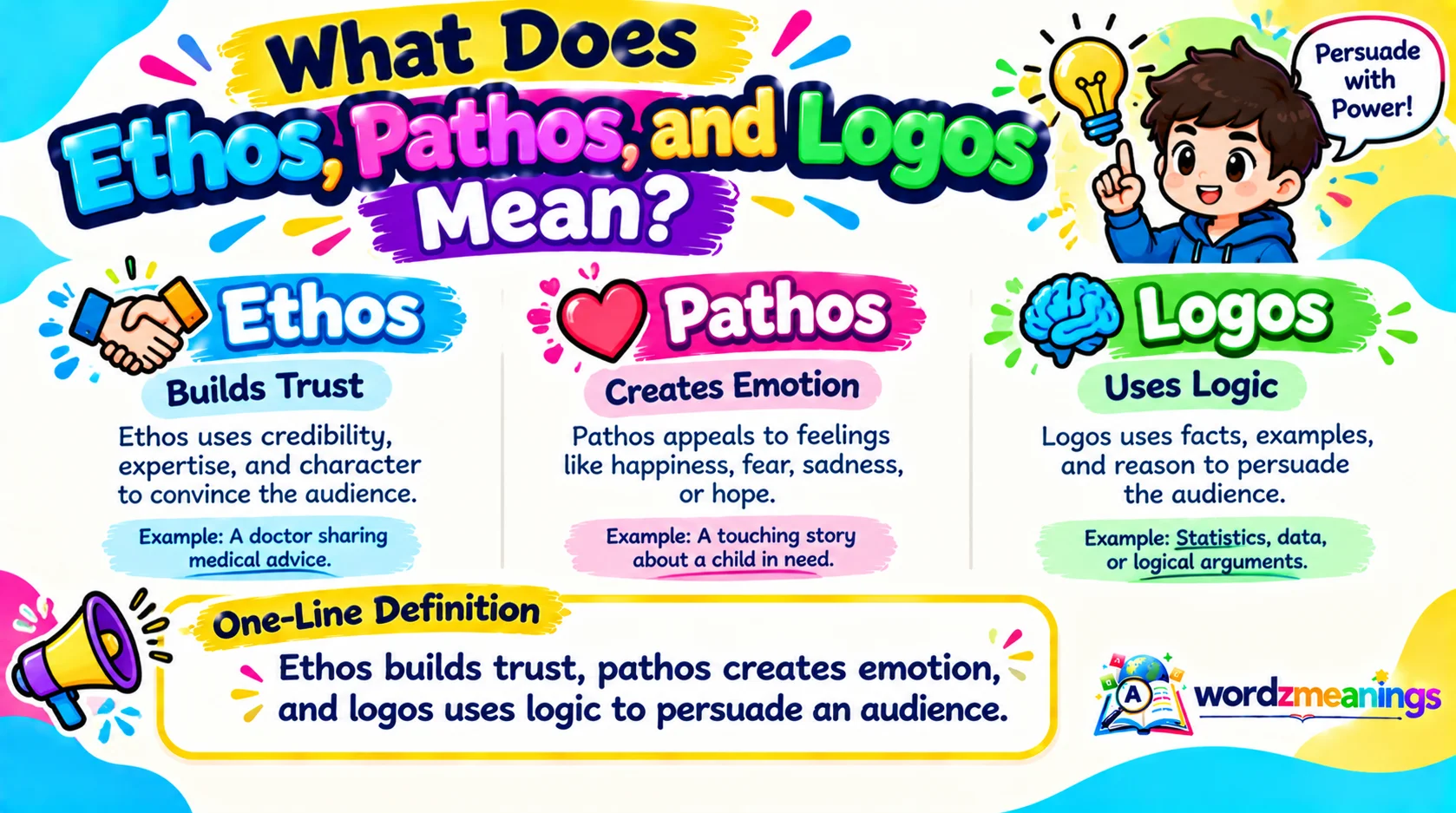
Ethos, pathos, and logos are three classic ways of persuading an audience.
Ethos appeals to credibility, pathos appeals to emotions, and logos appeals to logic and facts.
People often see these terms in English classes, essays, speeches, debates, advertisements, and persuasive writing.
━━━━━━━━━━━━━━━━━━━━━━
Quick Answer
| Term | Meaning | Main Appeal |
|---|---|---|
| Ethos | Persuasion through trust, character, or credibility | Trust |
| Pathos | Persuasion through feelings and emotions | Emotion |
| Logos | Persuasion through logic, facts, evidence, and reasoning | Logic |
Full Forms
Ethos, pathos, and logos are not abbreviations, so they don’t have traditional “full forms.”
- Ethos = credibility or character
- Pathos = emotional appeal
- Logos = logical appeal
Pronunciation
- Ethos: EE-thos
- Pathos: PAY-thos
- Logos: LOG-os
Category
Persuasive communication, rhetoric, writing, public speaking, and argumentation.
Tone
Usually neutral and academic, but the three appeals can be used in emotional, professional, casual, or persuasive communication.
Used On
Essays, speeches, debates, advertisements, social media, political communication, presentations, marketing, and everyday arguments.
Difficulty Level
What Does Ethos Pathos
One-Line Definition
Ethos builds trust, pathos creates emotion, and logos uses logic to persuade an audience.
━━━━━━━━━━━━━━━━━━━━━━
What Do Ethos, Pathos, and Logos Mean?
Ethos, pathos, and logos describe three major ways a speaker or writer can persuade people. They help explain why an argument feels believable, emotional, or logical.
Ethos Means Credibility
Ethos is an appeal based on credibility, character, experience, or trust.
When someone uses ethos, they try to make the audience think:
“I should trust this person.”
For example, a doctor explaining a medical topic may use their professional knowledge to establish credibility.
A statement such as:
“As a teacher with 20 years of classroom experience, I have seen how regular reading helps students.”
uses ethos because the speaker points to their experience.
Pathos Means Emotion
What Does Ethos Pathos
Instead of mainly asking the audience to trust the speaker or examine facts, pathos tries to make people feel something.
That feeling could be:
- Happiness
- Sadness
- Fear
- Hope
- Anger
- Sympathy
- Excitement
- Love
- Pride
For example:
“Imagine a child going to bed hungry tonight.”
What Does Ethos Pathos
Logos Means Logic
Logos is an appeal based on logic, evidence, facts, examples, numbers, and clear reasoning.
It makes the audience think:
“This argument makes sense.”
For example:
“The school reduced late arrivals by 20% after changing its morning schedule.”
This is logos because it uses measurable evidence to support the point.
━━━━━━━━━━━━━━━━━━━━━━
The Simple Difference Between Ethos, Pathos, and Logos
The easiest way to remember the three is:
Ethos = “Trust Me”
Ethos focuses on who is speaking and why the audience should believe them.
Think:
Credibility → Trust → Ethos
Pathos = “Feel This”
Pathos focuses on what the audience feels.
Think:
Emotion → Feeling → Pathos
Logos = “Think About This”
Logos focuses on facts and reasoning.
Think:
Logic → Evidence → Logos
Easy Memory Trick
What Does Ethos Pathos
| Appeal | Question |
|---|---|
| Ethos | Can I trust the speaker? |
| Pathos | What does this make me feel? |
| Logos | Does this make logical sense? |
━━━━━━━━━━━━━━━━━━━━━━
What Is Ethos?
Ethos is one of the three classical rhetorical appeals. It persuades an audience by showing that the speaker or writer is trustworthy, knowledgeable, responsible, or credible.
How Ethos Works
People don’t only judge an argument by its information. They also think about the person presenting it.
For example, imagine two people give advice about repairing a car.
One person says:
“I’ve repaired cars for 25 years, and I’ve worked with this type of engine many times.”
What Does Ethos Pathos
“I have never worked on a car, but I think this is how you fix it.”
The first speaker has stronger ethos because they provide a reason for the audience to trust their knowledge.
Examples of Ethos
Ethos can come from:
- Professional experience
- Education
- Expertise
- Personal experience
- Honest language
- Good reputation
- Fair treatment of opposing views
- What Does Ethos Pathos
Ethos in an Essay
A student can use ethos by showing knowledge of the topic and using reliable evidence correctly.
For example:
“After studying the effects of sleep on student performance, researchers found that regular sleep can support attention and learning.”
The writer can strengthen the argument by clearly explaining where the information comes from.
━━━━━━━━━━━━━━━━━━━━━━
What Is Pathos?
What Does Ethos Pathos
How Pathos Works
People don’t make every decision using facts alone. Emotions can strongly affect what people believe, remember, and choose.
A charity advertisement showing a person struggling may create sadness or sympathy.
A sports advertisement showing a team overcoming a difficult challenge may create excitement or inspiration.
Both examples use pathos.
Examples of Pathos
Pathos can create feelings such as:
- Sympathy
- Hope
- Fear
- Joy
- What Does Ethos Pathos
- Pride
- Love
- Excitement
Pathos in Writing
A writer might use a personal story to make an issue feel real.
For example:
“For many students, the school library is the only quiet place where they can study after a difficult day at home.”
The sentence is not just presenting information. It encourages the reader to think about students’ experiences and feelings.
━━━━━━━━━━━━━━━━━━━━━━
What Is Logos?
Logos is the appeal to logic and reason.
It supports an argument with information that allows the audience to follow the reasoning.
How Logos Works
Logos may include:
- Facts
- Statistics
- Research
- Examples
- Cause-and-effect reasoning
- Comparisons
- Data
- Evidence
- Clear explanations
What Does Ethos Pathos
“Students who have access to quiet study areas have more opportunities to complete their homework without distractions.”
The argument can become stronger when supported by relevant evidence.
Logos in an Essay
Logos is especially common in argumentative and persuasive essays.
A student might make a claim, provide evidence, and then explain how that evidence supports the claim.
A basic pattern is:
Claim → Evidence → Explanation → Conclusion
What Does Ethos Pathos
━━━━━━━━━━━━━━━━━━━━━━
Ethos vs. Pathos vs. Logos
| Feature | Ethos | Pathos | Logos |
|---|---|---|---|
| Main focus | Credibility | Emotion | Logic |
| Main goal | Build trust | Create feelings | Show reasoning |
| Key question | “Can I trust you?” | “How do I feel?” | “Does this make sense?” |
| Common tools | Experience, expertise, reputation | Stories, emotional words, imagery | Facts, evidence, statistics |
| Often used in | Speeches, essays, professional communication | Ads, stories, speeches | Essays, debates, reports |
| Simple meaning | Trust | Feel | Think |
━━━━━━━━━━━━━━━━━━━━━━
Can Ethos, Pathos, and Logos Be Used Together?
Yes. In fact, strong persuasive communication often combines all three.
A speaker might first establish credibility, then explain the facts, and finally show why the issue matters emotionally.
Example
Imagine a school principal wants students to reduce food waste.
Ethos:
“As someone who has worked in school education for more than 15 years, I’ve seen how small changes can improve our school.”
What Does Ethos Pathos
Logos:
“Last month, our cafeteria threw away hundreds of pounds of unused food.”
This gives the audience information.
Pathos:
“That food could have helped families in our community.”
This creates an emotional connection.
What Does Ethos Pathos
━━━━━━━━━━━━━━━━━━━━━━
Ethos, Pathos, and Logos in Everyday Life
These rhetorical appeals aren’t limited to school assignments. People use them every day, often without realizing it.
In Advertising
What Does Ethos, Pathos, and Logos Mean
It may use pathos by showing a happy family.
It may use logos by presenting product features or test results.
In Politics
Political speakers may use ethos by discussing their experience.
They may use pathos by talking about families, safety, or national pride.
What Does Ethos Pathos
In Social Media
Creators can use ethos by showing experience or expertise.
They can use pathos through personal stories.
They can use logos by sharing evidence, comparisons, or statistics.
In School
Students use all three when writing persuasive essays.
A strong essay may:
- Establish the writer’s understanding of the topic.
- Use evidence to support claims.
- Explain why the topic matters to people.
━━━━━━━━━━━━━━━━━━━━━━
Ethos, Pathos, and Logos in Persuasive Writing
Persuasive writing tries to convince the reader to accept an idea, change an opinion, or take an action.
Using Ethos in Persuasive Writing
Build credibility by showing that your information is informed and trustworthy.
Instead of making unsupported claims, explain your reasoning and use evidence appropriately.
Using Pathos in Persuasive Writing
What Does Ethos Pathos
A short story, realistic example, or carefully chosen emotional detail can make an argument more meaningful.
Using Logos in Persuasive Writing
Give readers a clear reason to accept your claim.
Use relevant evidence and explain how it supports your point.
━━━━━━━━━━━━━━━━━━━━━━
Ethos, Pathos, and Logos in Speeches
Public speakers often rely on all three rhetorical appeals.
Ethos in a Speech
A speaker might mention their background or experience.
What Does Ethos Pathos
This tells listeners why the speaker may understand the topic.
Pathos in a Speech
A speaker may tell a personal story.
“I still remember the first time my daughter walked onto that field.”
The story creates an emotional connection.
Logos in a Speech
The speaker can support an argument with facts.
What Does Ethos Pathos
The number gives the audience something concrete to consider.
━━━━━━━━━━━━━━━━━━━━━━
Ethos, Pathos, and Logos in Advertising
Advertising is a common place where all three rhetorical appeals appear.
Ethos in Advertising
An advertisement might feature:
- A doctor
- A professional athlete
- A chef
- An engineer
- A recognized expert
The goal is to make the product seem more trustworthy.
Pathos in Advertising
An advertisement might show:
- A loving family
- A child achieving a goal
- A person overcoming a challenge
- A happy celebration
- A touching personal story
The goal is to create an emotional connection.
Logos in Advertising
An advertisement might present:
- Product specifications
- Prices
- Measurements
- Customer numbers
- Performance comparisons
- What Does Ethos Pathos
The goal is to give the audience a logical reason to consider the product.
━━━━━━━━━━━━━━━━━━━━━━
How to Identify Ethos, Pathos, and Logos
When reading an advertisement, speech, essay, or social media post, ask three simple questions.
Step 1: Look for Credibility
Ask:
“Is the writer trying to make me trust them?”
If yes, you may be seeing ethos.
Step 2: Look for Emotion
Ask:
“Is the writer trying to make me feel something?”
If yes, you may be seeing pathos.
Step 3: Look for Evidence
Ask:
“Is the writer giving me facts or logical reasons?”
What Does Ethos Pathos
━━━━━━━━━━━━━━━━━━━━━━
Examples of Ethos, Pathos, and Logos
Example 1: Recycling
Ethos:
“As an environmental scientist, I have studied plastic pollution for years.”
Why it’s ethos: The speaker uses expertise to build trust.
Pathos:
“Imagine future children growing up surrounded by plastic waste.”
Why it’s pathos: The statement creates concern about the future.
Logos:
“Using reusable bottles can reduce the number of single-use bottles thrown away.”
Why it’s logos: The statement gives a logical reason for changing behavior.
━━━━━━━━━━━━━━━━━━━━━━
Example 2: School Uniforms
Ethos:
“After working in schools for 15 years, I believe uniforms can help create a shared school identity.”
What Does Ethos Pathos
Pathos:
“No student should feel embarrassed because their family cannot afford expensive clothes.”
The statement appeals to fairness and empathy.
Logos:
“A uniform policy gives students a consistent clothing standard instead of requiring different outfits each day.”
What Does Ethos Pathos
━━━━━━━━━━━━━━━━━━━━━━
Example 3: Exercise
Ethos:
“My experience as a fitness coach has taught me that beginners need realistic goals.”
The speaker establishes experience.
Pathos:
“You deserve to feel stronger and more confident in your own body.”
What Does Ethos Pathos
Logos:
“Starting with short workouts can make it easier to build a regular exercise habit.”
The statement gives a practical reason.
━━━━━━━━━━━━━━━━━━━━━━
Conversation Example: Ethos
Person A: Why should I listen to your advice about this?
Person B: I’ve worked in this field for more than ten years, so I’ve dealt with this problem many times.
Explanation
Person B is using ethos because they point to their experience as a reason to trust their advice.
━━━━━━━━━━━━━━━━━━━━━━
Conversation Example: Pathos
Person A: Why should we support this fundraiser?
Person B: Because some children in our community don’t have enough food at home.
Explanation
Person B uses pathos because the statement is designed to create sympathy and concern.
━━━━━━━━━━━━━━━━━━━━━━
Conversation Example: Logos
Person A: Why should we leave earlier?
Person B: Traffic usually becomes heavier after 5 p.m., and our trip already takes about an hour.
Explanation
Person B uses logos because they give reasons that support the conclusion.
━━━━━━━━━━━━━━━━━━━━━━
Is Ethos, Pathos, and Logos a Rhetorical Device?
Yes. More precisely, ethos, pathos, and logos are rhetorical appeals used in rhetoric and persuasive communication.
They help explain different ways a communicator can influence an audience.
Calling them “rhetorical devices” isn’t completely wrong in casual discussion, but rhetorical appeals is the more precise term.
━━━━━━━━━━━━━━━━━━━━━━
Who Developed Ethos, Pathos, and Logos?
The three appeals are strongly associated with Aristotle, the ancient Greek philosopher.
Aristotle studied rhetoric and explained how speakers could persuade audiences.
His framework identified three important forms of persuasive appeal:
- Ethos
- Pathos
- Logos
What Does Ethos Pathos
━━━━━━━━━━━━━━━━━━━━━━
Why Are Ethos, Pathos, and Logos Important?
Understanding these concepts helps you both create arguments and evaluate arguments.
They Help You Write Better
You can make an argument stronger by combining credibility, emotion, and reasoning.
They Help You Understand Advertising
You can notice when an advertisement is trying to make you trust a person, feel an emotion, or accept a logical claim.
They Help You Analyze Speeches
When studying a speech, you can identify how the speaker attempts to influence the audience.
They Help You Think Critically
Recognizing rhetorical appeals can help you separate emotional persuasion from evidence-based reasoning.
━━━━━━━━━━━━━━━━━━━━━━
Common Mistakes About Ethos, Pathos, and Logos
Mistake 1: Thinking Logos Means “Only Facts”
Logos can involve facts, but it also includes reasoning and logical connections.
An argument can contain facts without clearly explaining why those facts support the conclusion.
Mistake 2: Thinking Pathos Is Always Manipulation
Pathos isn’t automatically dishonest or manipulative.
An emotional story can help people understand the human side of an issue.
The problem comes when emotions are used to replace evidence when evidence is needed.
Mistake 3: Thinking Ethos Means Being Famous
A person doesn’t need to be famous to have ethos.
Relevant knowledge, experience, honesty, and credibility can all contribute to ethos.
Mistake 4: Thinking You Must Choose Only One
A message can use ethos, pathos, and logos at the same time.
Strong communication often combines them.
━━━━━━━━━━━━━━━━━━━━━━
How Ethos, Pathos, and Logos Differ From Each Other
What Does Ethos Pathos
Ethos Targets Trust
Ethos makes the audience consider the speaker’s character and credibility.
Pathos Targets Emotion
Pathos makes the audience consider their feelings.
Logos Targets Reason
Logos makes the audience consider evidence and logic.
A useful formula is:
Ethos = Trust
Pathos = Feel
Logos = Think
━━━━━━━━━━━━━━━━━━━━━━
Can One Sentence Use All Three?
Yes.
Consider:
“As a teacher who has worked with students for 20 years, I know that regular reading helps build strong habits, and I’ve seen students become more confident when they discover books they enjoy.”
Ethos
“As a teacher who has worked with students for 20 years” establishes experience.
Logos
“Regular reading helps build strong habits” presents a reasoned claim.
Pathos
“Students become more confident when they discover books they enjoy” creates a positive emotional connection.
The same message can therefore contain more than one rhetorical appeal.
━━━━━━━━━━━━━━━━━━━━━━
Ethos, Pathos, and Logos in an Essay
If you’re writing an argumentative essay, you can use all three naturally.
Start With a Clear Claim
Tell the reader what you believe.
Build Credibility
Show that you understand the topic and handle information responsibly.
Add Evidence
Use facts, examples, data, and reasoning to support your claims.
Add Human Meaning
Explain why the issue matters to real people.
Avoid Overusing Emotion
Emotion can support an argument, but it shouldn’t hide weak evidence.
━━━━━━━━━━━━━━━━━━━━━━
How to Use Ethos, Pathos, and Logos Correctly
Use Ethos When Trust Matters
Ethos works well when your audience needs a reason to believe your knowledge or experience.
Use Pathos When Human Impact Matters
Pathos is useful when an issue has a personal or emotional side.
Use Logos When Evidence Matters
Logos is important when your audience needs facts or clear reasoning before accepting your conclusion.
Combine Them Carefully
The strongest approach is often balance.
You want your audience to:
Trust you → understand the evidence → care about the issue.
━━━━━━━━━━━━━━━━━━━━━━
Frequently Asked Questions
What does ethos, pathos, and logos mean in simple words?
Ethos means trust, pathos means emotion, and logos means logic. They are three ways of persuading an audience.
What is the easiest way to remember ethos, pathos, and logos?
Remember:
Ethos = trust
Pathos = feel
Logos = think
What does ethos mean?
Ethos means using credibility, character, knowledge, or experience to make an audience trust a speaker or writer.
What does pathos mean?
Pathos means appealing to an audience’s emotions and feelings.
What does logos mean?
Logos means using logic, evidence, facts, examples, and reasoning to support an argument.
Are ethos, pathos, and logos only used in school?
No. They appear in advertising, speeches, debates, social media, politics, marketing, business, and everyday conversations.
Is ethos about emotion?
No. Ethos mainly concerns credibility and trust. Pathos is the appeal that focuses on emotion.
Is pathos always emotional manipulation?
No. Pathos can simply help an audience understand the human or emotional side of an issue. It becomes problematic when emotion is used dishonestly or to distract from important evidence.
Is logos the same as facts?
Not exactly. Facts can support logos, but logos also involves how those facts are connected through reasoning.
Can an argument use all three?
Yes. A single argument can establish credibility through ethos, create an emotional connection through pathos, and provide evidence through logos.
Why are ethos, pathos, and logos important?
They help people understand how persuasion works. They are also useful for writing stronger arguments and recognizing persuasive techniques in advertisements, speeches, and online content.
━━━━━━━━━━━━━━━━━━━━━━
Conclusion
Ethos, pathos, and logos are three basic ways to persuade people. Ethos builds trust, pathos connects with emotion, and logos uses logic and evidence.
Once you learn the difference, it’s easier to understand persuasive essays, speeches, advertisements, debates, and everyday arguments.
When you’re analyzing a message, ask three questions: Can I trust the speaker? What is this making me feel? Does the reasoning make sense? Those three questions can help you spot ethos, pathos, and logos quickly.

I am Brandon Ellis, a language enthusiast and content writer at WordzMeanings. I create clear, accurate, and easy-to-understand explanations of words, phrases, and expressions to help readers improve their English every day.



